

At the end of my first essay, after taking you on a lengthy detour of Finnish schoolchildren, evolutionary psychology, provocatively dressed research assistants, Queen Bees, workplace politics, relational aggression, and the various creative ways women have developed to make one another miserable without actually punching each other, I finally arrived at the WNBA. More specifically, I arrived at Caitlin Clark.
Women can be competitive human beings and female competition tends to take different forms from male competition. Women are perfectly capable of direct aggression, obviously, but the research suggests that we also make particularly effective use of indirect and relational strategies.
Women’s professional basketball is an environment that brings these dynamics into direct contact with a sport in which overt physical aggression is not merely permitted but, within the rules, required.

There are many perfectly sensible reasons for Caitlin Clark’s fellow WNBA players to dislike, or feel threatened by, her. She is extremely good at basketball with a habit of shooting three-pointers from locations which most players wouldn’t dare try. She is competitive, demonstrative, and occasionally mouthy. She complains to referees, commits turnovers, and accumulates technical fouls like they all collect designer sneakers. Dislike of any of this does not require an excursion into the darker corners of female psychology. Professional athletes are supposed to be rivals, and the drama around how other players engage with and about Clark has never been about them competing hard against her or making critiques of her game. What draws attention is the apparently unreasonable and unfair treatment she receives simply because of the status she has and because she has done what many in the women’s game could not.
Since Clark entered the league in 2024, almost every incident involving her has seemed capable of turning into an argument about something much larger. Whether she deserves her popularity, if other players resent her, if her fans are racist, whether criticism of her is racist, whether criticism of the criticism is racist, if she is being unfairly targeted or receives preferential treatment, whether the league is sufficiently grateful for her existence and, whether noticing any of this makes you a deranged Caitlin Clark obsessive. An aggressive foul that should occupy no more than twenty seconds of everybody’s attention somehow generates three days of fractious discourse and at least 17 multidirectional accusations of racism.
As I argued in the first essay in this series, women are not less competitive than men. The evidence simply does not support the comforting idea that female social groups are naturally harmonious communities in which everybody wants the best for everybody else even if this is still how they are marketed. Female competition can be ferocious, but often it is expressed through different mechanisms from male competition. Go back and read essay one for in depth discussion of this.
The WNBA therefore offers an unusually useful environment in which to observe those mechanisms in action because the competition taking place is not confined to the scoreboard. The women are competing for championships, roster places, and individual honours, obviously, but also for status, endorsements, cultural relevance, and recognition within a small professional world where everybody knows everybody else. Clark’s arrival in the league abruptly reordered several of those hierarchies at once. That is why the strange behaviour surrounding her interests me so much. The question is not whether women are competitive enough to resent a rival’s success, because of course they are. It is what female competition looks like when one woman suddenly becomes so conspicuously elevated above her peers that the entire group has to renegotiate its understanding of who deserves what.
Caitlin Clark joined the WNBA as a talented rookie, but she did not grow her popularity over time. She arrived in a way that was totally foreign to the women’s game, carrying an already existing socially disruptive, and (by WNBA standards) enormous audience. She was the National Collegiate Athletic Association’s (NCAA) all-time leading scorer and had succeeded in turning women’s college basketball into a spectacle worth watching. The 2024 NCAA championship game between Iowa and South Carolina attracted 18.9 million viewers. That is a college game! Then her first WNBA game averaged 2.1 million viewers across ESPN2, ESPN+, and Disney+, and was at that point the largest audience ESPN had recorded for a WNBA game since 2004. By comparison, the second game broadcast that same night, featuring the defending champions Las Vegas Aces, averaged 464,000 viewers.
What would come to be known as the Caitlin Clark Effect continued well beyond opening night and teams were soon moving games into larger arenas to accommodate demand. The WNBA draft broke viewership records and the 2024 regular season became the league’s most watched in 24 years. An economist at Indiana University Columbus has estimated Clark’s economic impact on Indianapolis at $36 million and attributed almost 27% of the league’s 2024 economic activity to her, including television, merchandise, and attendance. Clark’s agent, Erin Kane, has made the point that it will never be possible for the WNBA to pay Clark what she is actually worth to it. It is difficult to call that assessment hyperbole because it is true Clark is far more than just one of the WNBA’s popular players. She has fundamentally altered the scale of the market.
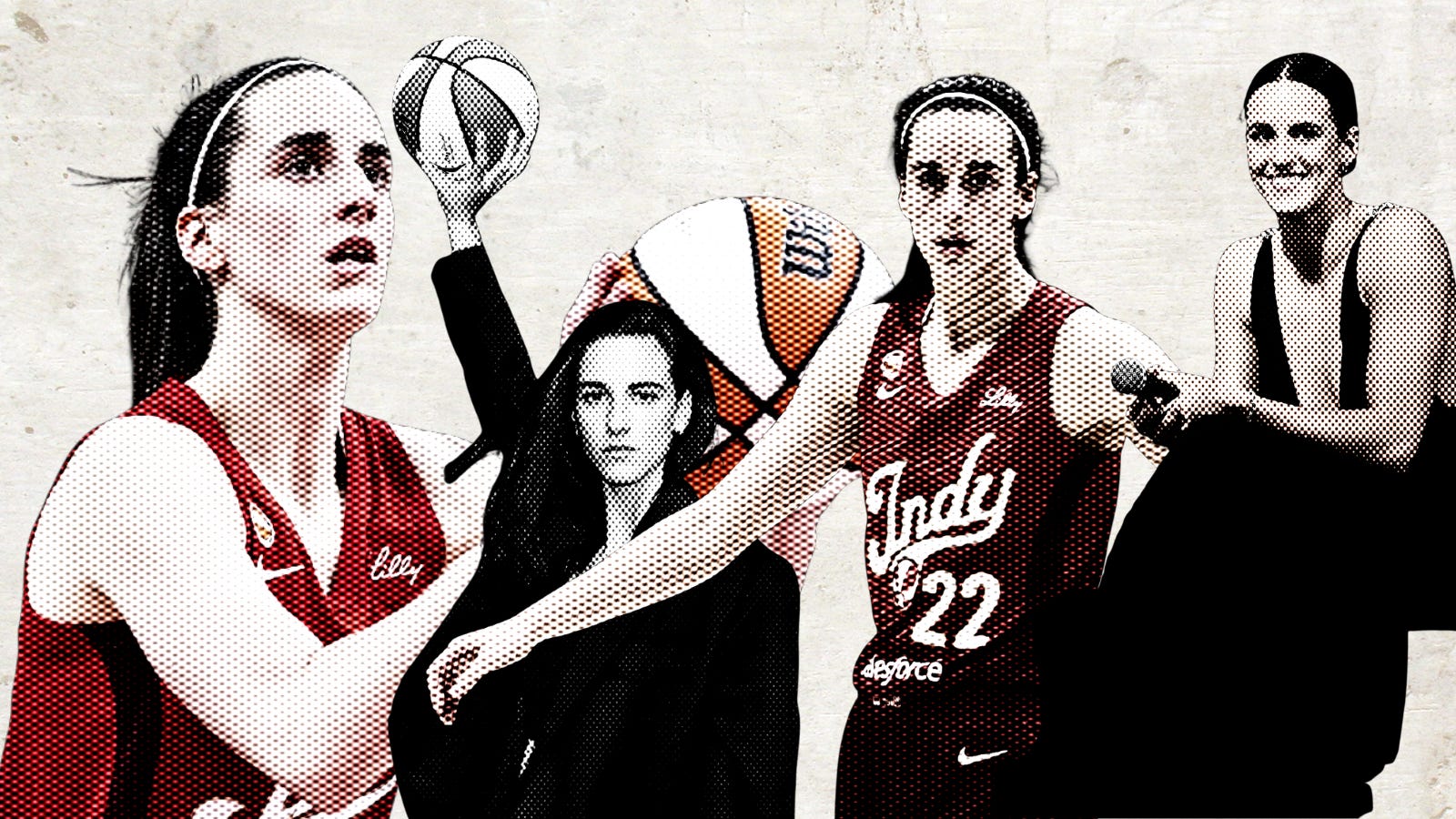
But. BUT, she arrived in a league containing champions, Olympians, MVPs, and women who had spent years trying to persuade the public to care about women’s professional basketball, and immediately became more famous than all of them. And therein lies the problem.
Imagine you have spent perhaps ten years playing professional basketball, training since childhood, and spending your off seasons overseas because domestic women’s basketball offers a fraction of the money available to NBA players. You have played in front of nearly empty arenas and given interviews to journalists working for publications that are obligated to cover your sport to fulfil a DEI quota. Nonetheless, you have won championships, made All-Star teams, represented your country, and spent years fighting to prove that women’s basketball is entertaining, commercially viable, and deserving of serious attention. Then a 22 year old walks through the door and like magic the arenas begin filling, people are tuning in like never before, merchandise flies off the shelves, sponsors appear from nowhere, and journalists begin producing daily WNBA commentary. Millions of new fans behave as though women’s basketball has just been invented, and much of the attention you have spent your professional life trying to attract is directed overwhelmingly towards the newcomer. I suspect most people would find that hard to swallow even if they were now seeing all that they fought for finally playing out. Some might call it bittersweet and many more would never let on that they feel aggrieved, robbed, jealous. However, now the emotional conflict is spilling over and we are observing individual and collective behaviour that borders on self-sabotage.
Female social life has long contained a strong egalitarian expectation around how ambition should be displayed. A woman may succeed, but in order to not fall foul of the pack she must remain warm, collaborative, self-deprecating, and part of the group. She may distinguish herself, provided she does not make too much of the distinction. Be ambitious by all means, but naked status seeking carries social costs, particularly when it appears to come at the expense of other women. A pretence is often required that is not expected in male sports and that is that while becoming exceptional women must reassure everybody that they have not risen above them.
It is because of this that female competition can be psychologically complicated. Competitiveness does not disappear because overt dominance is discouraged. Instead, questions of hierarchy can morph into proxy questions of deservingness, fairness, loyalty, inclusion, and whether somebody is taking more than her fair share. Clark has no doubt disrupted the egalitarian equilibrium even though she has seemed to take great care to avoid violating its norms explicitly herself. She did not strut into the WNBA with a god complex nor demand that television networks reorganise their schedules around her. However, millions of other people effectively did it for her.
The entire situation is an almost lab-quality exercise in social comparison theory. Psychologist Leon Festinger, the godfather of the theory, argues that human beings evaluate themselves in large part by comparing themselves with other people, and the people who matter most for those comparisons are generally not random strangers. We compare ourselves with people who occupy relevant social categories in our immediate surrounds such as colleagues, siblings, friends, classmates, and professional peers. Somebody being spectacularly successful in a field outside of a person’s field of interest or expertise is unlikely to stir feelings of inadequacy, but somebody succeeding spectacularly in our vicinity tells us about our own status.
As discussed in the first essay, female competition has historically been unusually sensitive to comparison within relevant peer groups, partly because women compete intensely over qualities whose value is inherently measured in relative terms like attractiveness, desirability, and popularity. It does not matter that another woman is beautiful in some abstract sense. What is key is whether she is more beautiful than you in a setting where beauty carries rewards, for example. Likewise, another woman’s popularity becomes more salient when you occupy the same social world and are competing for the same attention. Female hierarchies can appear superficially egalitarian while containing an enormous amount of quiet ranking underneath. Women are constantly receiving information about where we sit relative to other women, and much of female social behaviour is shaped by managing the emotional consequences of those comparisons.
Psychologists distinguish between downward and upward social comparisons. Looking at somebody doing worse than you can make your own position appear rather good while looking at somebody doing better can be motivating, particularly where their success seems attainable, or it can trigger negative self-evaluation. Whether that comparison inspires or torments us depends a great deal on who we are comparing ourselves to and what we care about.
How am I doing relative to women like me? is a question that plagues women consciously and subconsciously multiple times a day. Professional sport puts this dynamic on steroids. These female athletes are approximately the same age bracket, doing the same job, competing for the same honours, and being discussed by the same journalists. And so, in this context, Clark represents a powerful upward comparison for other professional players because she is simultaneously similar enough to be directly comparable and possesses advantages they cannot acquire by simply practising harder. Her fame is not reducible only to basketball statistics because there is an element of kismet to the way she had the right combination of talent, style, personality, rivalry, exposure, and cultural timing to become a national phenomenon.
Critics or cynics of her fame insist that there are other players of comparable talent and there are. A’ja Wilson is a superstar and appears to be the obvious favourite for a fifth MVP award. Paige Bueckers is constantly compared to Clark. There are exceptional athletes in every team, but Clark nevertheless remains the face of the league much to the chagrin of those playing in it. She is also an MVP contender herself. However, despite her elite profile and obvious skill, she does not feature as prominently in discussions of who will be the MVP. In fact, her fellow players ranked her only 11th in her position during All-Star starter voting earlier this season. Now, All-Star voting is not exactly a controlled experiment, but it shows that Clark’s extraordinary public status does not translate into peer status. Why do Caitlin Clark’s own peers rank her so poorly? The player who is drawing millions of people to the game cannot reasonably be assessed as the 11th best guard in the competition. Can she?
In New Zealand we might call this a case of Tall Poppy Syndrome. Groups become uncomfortable with people who rise conspicuously above the rest, particularly where their elevated status is disruptive to an egalitarian norm and so they are cut down to size. Tall Poppy among women is heightened by conspicuous female success coming with the compulsory likability bargain I discussed earlier. The more exceptional she becomes, the more carefully she may be expected to communicate that she does not consider herself exceptional.
Clark has actually performed this ritual pretty well. She routinely credits teammates, speaks respectfully about opponents, and has resisted invitations to cast herself as the persecuted heroine of the league, even when some of her more enthusiastic supporters clearly want her to do so. She has resisted turning other players’ behaviour towards her into personal dramas. Yet her modest behaviour has not neutralised an objective status difference of such magnitude.
Women’s achievements are frequently narrated as victories for all women and there are good historical explanations for that. When women were excluded from professions, politics, universities, and elite sport, the success of one woman genuinely could expand the possibilities for other women and some of that logic remains attached to modern ideas of sisterhood. Women are expected to support women, celebrate women’s achievements explicitly, and understand individual female advancement as collective progress. In practice, this is a laughable failure.
The difficulty arrives when collective progress also produces radically unequal individual rewards. It is easy to celebrate a hypothetical woman smashing a glass ceiling, but in order to do so she has to elevate beyond the pack and be exceptional. The very things required to be a groundbreaker are transgressions against the sisterhood. Resentment often follows the shatterer of the glass ceiling because those who have also toiled (and those who wish they had) cannot bear the uneven distribution of attention and rewards. Collective gain and individual status loss can happen simultaneously. For example, more journalists can cover women’s basketball while spending a disproportionate amount of their time writing about Clark.
It is fair to criticise what can be seen as petulant jealousy, no matter how human the instincts driving it are, but it is unreasonable to expect (as some seem to) that Clark’s peers should fall over themselves to express gratitude to her. Her supporters, in particular, like to insist that other WNBA players should be grateful to her because the audience she brought has increased attention, revenues, and ultimately the economic prospects of everybody in the league. The demand for this gratitude contains a kind of status judgement itself. It says that the thing you spent years building only succeeded when somebody more marketable arrived. The more aggressively Clark’s fans demand gratitude, the more likely they are to trigger the opposite reaction.
It comes back to that egalitarian, reciprocal collectivism in female groups again. Asymmetrical relationships, like Clark’s with the rest of the WNBA, are terribly unwelcome. However, despite resentment and resistance, a dynamic of reciprocity still exists. Clark benefits from a league built by women who arrived before her and those women now benefit from an audience disproportionately attracted by her. Everybody possesses a plausible claim upon everybody else’s gratitude. Likewise, everyone has a similar vulnerability to resentment and dissatisfaction. Each side may feel the other is guilty of insufficient appreciation and resentment thrives in relationships where everybody believes she is the one who has given more.
Before Clark arrived, status within the WNBA was pretty reliably distributed through championships, MVP awards, Olympic selections, longevity, statistical performance, and respect from one’s peers. When Clark introduced public attention on a scale nobody else possessed she upset the apple cart. She did not “do her time” and she had not proven herself at first.
Clark’s rivalry with Angel Reese showcases how the perception of unfairness can drive resentment and trigger female-typical indirect relational aggression as well as more direct conflict. Their pre-WNBA college rivalry helped drive enormous audiences, and through it Reese has herself become one of the most recognisable athletes in women’s basketball. However, in June 2024, after Clark’s arrival in the WNBA had begun transforming its audiences, Reese awkwardly told reporters that people would eventually look back and realise that the increased interest in women’s basketball was not just because of one person. “It’s because of me too,” she said.
And there is nothing inherently outrageous about that claim given Reese was unquestionably part of the story. Reese was willing to occupy the “bad guy” role and the resulting attention helped women’s basketball and grew her profile. But the form of the complaint nonetheless sounds like an undignified whinge. Even though Reese did not say, “I should be more famous than Caitlin Clark” or “I am better than Caitlin Clark and resent that people like her more” she kind of may as well have. Almost nobody states status competition that nakedly. And that is why the complaint is expressed in terms of unfair distribution. The credit is being allocated unfairly. Attention should be shared more evenly because other women helped produce this success. The narrative is that Clark is being given more than her rightful portion. Concepts of fairness, deservingness, and group contribution provide a socially legitimate vocabulary through which competition can be conducted.
The Clark-Reese dynamic has become even more complicated over time because their fan bases have become embroiled in the rivalry too and crowds of any kind often contain people who behave appallingly. The women have become symbolic centres of groups they do not control, but misconduct by members of those groups is routinely attached back to them regardless.
As discussed in Essay #1 female conflict is particularly prone to becoming coalitionary. But whereas female coalitions usually partake in giving the collective cold shoulder to a transgressor, in women’s basketball social coalitions use direct physical aggression too. They gang up, consciously and subconsciously, and shove, block, foul, and engage in all manner of physical intimidation toward the transgressor. For the past two seasons that person has been Caitlin Clark, although she has been joined by a team mate recently. Sophie Cunningham fell afoul of the mob by daring to advocate for women’s sport to be genuinely single sex. This resulted in demonstrations of female-typical indirect aggression I could hardly have written better myself.
Minnesota Lynx coach Cheryl Reeve wore a t-shirt with ‘Trans Kids Belong’ printed on it when her team played the Fever (Clark and Cunningham’s team). The Toronto Tempo debuted a new mascot for their game against the Fever; a nonbinary character called Dez who appears to be some kind of Ninja Turtle. And the New York Liberty displayed at least three pro-trans messages on their halftime scoreboard. Collective, passive aggression against a player who said something entirely reasonable (a view widely held by the general public) but is perceived to have attacked a Sacred Cow.

Cunningham exemplifies the Black Sheep Effect. She is being judged harshly and punished for being a member of the group but not adhering to the unwritten rules. She is not an outsider criticising the political culture of women’s basketball. She is a WNBA player publicly rejecting one of its contemporary orthodoxies. Women often police the groups to which they belong extra aggressively because those groups are inextricably tied to their identity. A failure to meet group expectations is therefore not so much seen as an individual error or wrong, but an existential threat to the collective sense of self.
Clark is primarily the Tall Poppy who has disrupted the hierarchy. Cunningham is the Black Sheep who has violated the group's norms.
Basketball is a contact sport and Clark is going to be fouled like anyone else. Some of those fouls will be dirty and some will look much worse when replayed twelve times in slow motion by outraged people on social media. But it is not the physicality alone that piques interest and gets tongues wagging. Female relational aggression is, by definition, concerned with relationships and social standing rather than simply somebody smacking you in the face. What sets the interactions apart is what happens around the contact. Who laughs, who minimises it, who defends it, who refuses to condemn it, who interprets retaliation differently depending upon which woman committed it, and which coalitions assemble almost instantaneously around the participants. A foul can be pretty banal while the response to it reveals the social hierarchy in which the basketball is taking place.
Sophie Cunningham has become an interesting addition to this case study. She first attracted attention from Clark supporters after retaliating against Jacy Sheldon during a heated Fever-Sun game in 2025. Sheldon had poked Clark in the eye, Marina Mabrey then shoved Clark to the floor, and Cunningham later delivered a conspicuously retaliatory foul on Sheldon. She was ejected, as she should have been, but also acquired the reputation of being Clark’s enforcer. She was the teammate willing to do physically what fans believed the rest of the league had failed to do institutionally; protect Caitlin Clark.
As discussed, Cunningham has subsequently made herself even more of a target by violating one of the WNBA’s strongest political norms. An utterly conventional opinion among the wider public, it is an extremely unconventional one within the contemporary culture of elite women’s basketball. The response to her transgression against the group has provided a neat illustration of the difference between direct disagreement and relational punishment. The political response has functioned as social signalling. Expressions of allegiance to the orthodoxy of the group and indirect condemnations of Cunningham. Nobody needed to say Sophie Cunningham is no longer one of us. The group communicated that by making the approved position more visible.
Relational conflict can be conducted at huge scale through modern technology. What might once have been a disagreement among a dozen or so women now recruits hundreds of thousands of strangers who can reward aggression, punish dissent, circulate humiliating clips, revive old grievances, and inform everybody involved which side they are expected to occupy.
And so nothing involving Clark remains merely about Clark. A disputed foul becomes evidence of racism, reverse racism, jealousy, preferential treatment, a dangerous fandom, or institutional hostility depending upon which coalition is doing the interpreting. A player ranking becomes evidence that Clark is overrated to one side and underrated to the other. A coach’s t-shirt is an expression of solidarity to some and a passive aggressive rebuke to others.
The refereeing controversies are in themselves part of the meta-narrative of coalitional grievance. Clark’s supporters have assembled lengthy edits of examples of hard contact against her that went uncalled or were upgraded retrospectively, while critics point out that WNBA officiating is inconsistent generally and that Clark herself benefits from calls, complains constantly, and plays a style of basketball that naturally attracts contact. Both can be true.
An acute example of a perceived targeting of Clark that was ignored by referees was Alyssa Thomas’s contact with Clark’s throat this season. The play went uncalled in real time before the league retrospectively upgraded it and Thomas was suspended. Of course, that does not prove Thomas attacked Clark because she resented her fame, but it does show that a physical act serious enough to warrant suspension was initially treated as nothing by the people responsible for policing the game.
Institutions help establish the boundaries of acceptable behaviour by what they permit. If officials routinely allow unusually physical defence against a particular player, defenders will exploit that. Then the pattern reinforces itself without any individual participant consciously deciding to target her.
Similarly, nobody needs to convene a secret meeting at which the women of the WNBA agree to cut Caitlin Clark down to size. That is not how female social punishment generally works in the first place. It tends to begin with an influencer, a leader, taking action or signalling and then one by one her group takes up the cause. One woman makes a dismissive remark, another minimises an incident, and then someone else publicly supports the woman in conflict with the target. A sympathetic journalist might supply a respectable interpretation of the behaviour while fans reward the participants who have chosen the correct coalition. Each individual action remains small enough to explain away while the cumulative pattern is unmistakable to the person experiencing it.
Relational aggression is maddening in this regard inside and outside professional sport. If somebody punches you, everybody understands what happened. If four women independently become slightly colder towards you after one member of the group falls out with you, there is no single event to point to. Female-typical social punishment often allows the aggressors to maintain both plausible deniability and a positive conception of themselves.
It is because of these complex and baked in dynamics that I am reluctant to reduce everything to the word jealousy. Jealousy, envy, and resentment are obviously present in this story. But “they’re all jealous of Caitlin Clark” is a psychologically crude assessment and analytically lazy.
And the NBA is not a straightforward male equivalent. Male professional basketball contains jealousy, hazing, dirty play, status competition, and enormous egos, for sure. But male hierarchies are generally allowed to be much more explicit. Nobody finds it socially troubling to say that LeBron James became the face of the NBA, that Michael Jordan was vastly more commercially valuable than most of his peers, or that a rookie has ambitions to become the best player in the world. Male sporting culture contains a language for dominance that does not require everybody to maintain the fiction of horizontal solidarity. There is no brotherhood ideology hovering above male professional sport demanding that individual ambition be reconciled with collective male advancement. Men gain respect as they succeed and dominate. Women often do not.
Clark became the tallest poppy in a field that had spent decades demanding sunlight. Her arrival brought more of it than women’s professional basketball had ever received, but sunlight creates shadows as well as growth. Players who had fought for attention found themselves receiving more of it while simultaneously becoming less central to the story. A collective victory therefore contained dozens of individual comparisons, and some of those comparisons inevitably hurt.
To be abundantly clear, none of this excuses bad behaviour. Understanding emotion and behaviour is not the same as absolving it. If resentment contributes to unfair treatment, the treatment remains unfair. If a group punishes somebody for becoming too successful, describing the psychological mechanism does not make the punishment acceptable.
But. BUT, refusing to acknowledge these dynamics because they offend a wishful vision of sisterhood is wilful blindness. Women compete with women, compare ourselves relentlessly, form coalitions, enforce norms, police status, and sometimes experience another woman’s success as indicative of our own inadequacy. None of this makes women uniquely awful. It makes us human, with some recognisably female ways of managing very ordinary human impulses.
Ani, you've dared to be explicit about things that women don't talk about it. The sisterhood is not going to like it. But speaking as a past tall poppy and having experienced some of the things you describe, it's all true.
Hey Ani. Do one about LeBron playing in the WNBA. 🤣